Source Aluminum Ingot for Overhead, Heating, and Underground Uses
Find 30 verified aluminum ingot listings with varying purity grades and specifications. Buyers can compare raw material options for overhead, heating, and underground applications directly from suppliers in China.
Key considerations
Products List




Comprehensive Sourcing Guide
Strategic Sourcing Guide for Aluminum Ingots
Understanding Product Specifications and Material Grades
When initiating a procurement strategy for aluminum ingots, the first critical step is defining the precise technical specifications required for your downstream manufacturing or casting processes. The market offers a diverse range of aluminum forms, but for ingot procurement, the focus must remain on purity, alloy composition, and physical dimensions. Based on available market data, aluminum ingots are frequently categorized by their purity levels, with common grades ranging from Al99.6 to Al99.9. Buyers should verify if their application requires high-purity unalloyed aluminum, often designated as 1000 Series, or if specific alloying elements are necessary for mechanical strength.
The chemical composition is a primary differentiator. While some ingots are marketed as "Non-Alloy" with a chemical composition listed simply as "Al," others may contain trace elements such as Iron (Fe), Silicon (Si), and Manganese (Mn). These trace elements can significantly impact the material's behavior during remelting and casting. For instance, the presence of Iron and Silicon must be strictly controlled in applications requiring high electrical conductivity or specific refractory properties. The observed market data indicates purity levels starting at a minimum of 99% and extending up to 99.9% or higher. Procurement teams must explicitly request the chemical composition certificate to ensure the Fe and Si content aligns with the tolerance limits of their specific casting molds or extrusion dies.
Physical form factors also play a vital role in logistics and handling. While the core product is the ingot, the market data references related aluminum products with widths ranging from 50mm to 1950mm, suggesting that the supply chain may offer various shapes depending on the melting and casting equipment used. Buyers should confirm whether the supplier provides standard rectangular ingots, round wire forms, or custom shapes. The "Model No." or "Product Name" often encodes the specific grade, such as "Aluminum Ingot Adc12" or "Al99.9," which serves as a quick reference for the alloy series. Ensuring the correct model number is selected prevents costly errors in the melting process, where mixing incompatible grades can ruin an entire batch of finished goods.
Compliance, Certification, and Standard Verification
In the global aluminum market, compliance is not merely a formality but a prerequisite for market access and quality assurance. When sourcing aluminum ingots, buyers must rigorously verify the certifications held by the supplier. The industry commonly references international standards such as EN, GB, JIS, and ASTM. These standards dictate the chemical tolerances, mechanical properties, and testing methodologies that the ingots must satisfy. For example, an ingot intended for automotive casting might require adherence to specific ASTM standards, while domestic applications in China might rely on GB standards.
Certification documents are equally critical. The market data highlights the presence of ISO9001 certification, which indicates that the manufacturer has a quality management system in place. However, ISO9001 is a process certification and does not guarantee the specific quality of a single batch of ingots. Buyers should look for more specific product certifications, such as the Mill Test Certificate (MTC). The MTC is the primary document that provides traceability, confirming the heat number, chemical analysis, and physical test results for the specific batch being shipped. Without an MTC, the buyer assumes the risk that the material may not meet the stated purity or composition requirements.
Additionally, environmental and safety standards like RoHS may be relevant depending on the end-use application, particularly if the aluminum is destined for consumer electronics or products with strict hazardous substance restrictions. While the supply chain data mentions these standards, buyers must not assume every supplier automatically complies. The verification process should involve requesting a copy of the current certificate and checking its validity date. It is also important to note that the "Place of Origin" is often cited as Shandong, China, a major hub for aluminum production. While this indicates a concentration of supply, it does not inherently guarantee quality; the specific factory's adherence to these standards is what matters. Buyers should treat the origin as a logistical fact and the certification as a technical requirement that must be independently validated for each order.
Cost Drivers and Pricing Dynamics
The pricing of aluminum ingots is highly volatile and influenced by a complex matrix of factors, making it difficult to predict costs without real-time market data. The observed price range in the market spans from $2 to $8,000, a variance that reflects differences in purity, volume, alloying elements, and packaging requirements. A price at the lower end of this spectrum likely corresponds to lower purity grades or smaller, single-item packages, whereas the higher end may reflect high-purity Al99.9 ingots sold in bulk with specialized packaging.
Volume is the most significant driver of cost efficiency. The Minimum Order Quantity (MOQ) observed in the market ranges from 1 ton to 25,000 units, indicating that suppliers offer flexibility for small-scale testing but demand significant volume commitments for standard pricing. Buyers purchasing in bulk, such as the 1-ton MOQ often cited for unalloyed ingots, typically benefit from lower unit costs due to economies of scale in production and logistics. Conversely, single-item purchases, often packaged in small boxes (e.g., 10x10x2 cm), will carry a premium per kilogram due to the overhead of individual handling and packaging.
Packaging and logistics also contribute to the final landed cost. The market data mentions "Standard Seaworthy Package," "Strong Sea Worthy Wooden Package," and "Covered with Woven Bag." The choice of packaging affects the weight and volume of the shipment, which directly impacts freight charges. For example, a wooden package provides superior protection for high-value, high-purity ingots but adds weight and cost compared to a woven bag. Furthermore, payment terms, such as the common 30% TT deposit plus 70% balance, influence the cash flow dynamics for the buyer. While the base price of the aluminum is tied to the London Metal Exchange (LME) or similar benchmarks, the final invoice will include these logistical and financial variables. Buyers should request a detailed breakdown of costs to understand how much of the price is attributable to the raw material versus packaging and shipping.
Typical Applications and Usage Scenarios
Aluminum ingots serve as the foundational raw material for a vast array of industrial applications, and the suitability of a specific ingot grade depends entirely on the intended end-use. The market data identifies several key application areas, including overhead lines, heating systems, and underground installations. These applications require ingots with specific conductivity and mechanical properties. For overhead and underground cables, high-purity aluminum (99.7% and above) is essential to ensure optimal electrical conductivity and resistance to corrosion.
Another significant application sector is refractory and remelting processes. In these scenarios, the ingot is melted down to create new components or to be alloyed with other metals. The "Usage: Remelting" attribute highlights that a primary function of these ingots is to serve as a feedstock for foundries. The chemical composition, particularly the levels of Iron and Silicon, must be controlled to prevent contamination of the final product. For instance, in the production of die-cast components, ingots with specific alloying elements like those found in ADC12 or ADC12B grades are required to achieve the desired fluidity and strength in the cast part.
The "Brand" and "Model No." information in the market data suggests that some suppliers offer specialized ingots for specific industries. For example, the "Refractory" application implies use in high-temperature environments, where the ingot's thermal stability is paramount. Similarly, the "Bare" type designation indicates that the ingot is supplied without insulation or sheathing, which is standard for raw material supply but requires careful handling to prevent oxidation before melting. Buyers must align their ingot selection with the specific thermal and mechanical demands of their manufacturing process. Using a generic grade for a high-performance application can lead to casting defects, reduced product life, and increased scrap rates.
Supplier Evaluation and Quality Control Protocols
Evaluating a supplier for aluminum ingot procurement requires a multi-faceted approach that goes beyond price comparison. The first step is verifying the supplier's ability to provide consistent quality through robust quality control (QC) protocols. A reliable supplier should be able to demonstrate a clear chain of custody from the smelter to the final delivery point. This includes the ability to provide batch-specific test results that match the chemical composition claims. The "Chemical Composition: Al Fe Si Mn Ect" attribute in the data suggests that detailed breakdowns are available, and buyers should insist on receiving these for every shipment.
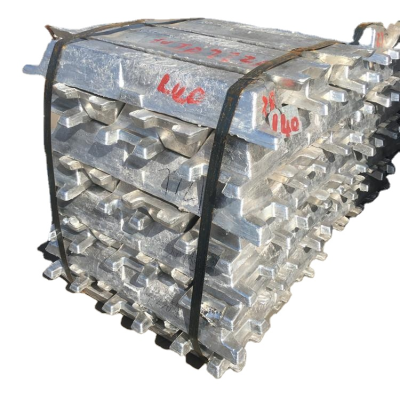
The "Surface Treatment" of the ingots, described as "Bright" or "Smooth," is another indicator of quality. A smooth surface suggests minimal oxidation and contamination, which facilitates easier melting and reduces dross formation. Buyers should inspect samples or request photos to verify that the ingots meet these surface standards. Additionally, the "Packing" method is a proxy for the supplier's attention to detail. A "Standard Seaworthy Package" or "Strong Sea Worthy Wooden Package" indicates that the supplier understands the risks of international shipping and has taken steps to protect the product from damage and moisture.
When evaluating suppliers, buyers should also consider their customization capabilities. The "Customization: Available" attribute indicates that some suppliers can tailor the ingot size, shape, or alloy composition to meet specific client needs. This flexibility is valuable for specialized projects but requires a closer partnership and more rigorous communication. The "Place of Origin" being Shandong, China, is a common location for aluminum production, but buyers should not assume all suppliers from this region are equal. Due diligence should include checking the supplier's production capacity, their history of on-time delivery, and their responsiveness to quality issues.
Long-Term Procurement and Strategic Considerations
Sourcing aluminum ingots is not a one-time transaction but a strategic relationship that impacts long-term operational efficiency. One of the key considerations is the stability of the supply chain. The "Lead Time" and "MOQ" constraints observed in the market can create bottlenecks if not managed correctly. Buyers should plan their inventory levels to accommodate the MOQ, which can range from 1 ton to 25,000 units, depending on the supplier. For smaller operations, finding a supplier with a low MOQ is essential to avoid tying up excessive capital in inventory.
Payment terms, such as the "30% TT + 70% Balance" structure, are standard but require careful financial planning. Buyers should negotiate terms that align with their cash flow cycles while ensuring they have leverage to enforce quality standards. The "Keyword: Aliuminium Ingot A7" and similar terms suggest that specific industry codes exist, and buyers should ensure their procurement systems are updated to recognize these codes for accurate tracking and reporting.
Finally, sustainability and environmental compliance are becoming increasingly important. While the market data mentions "RoHS" and "ISO9001," buyers should inquire about the supplier's carbon footprint and recycling practices. The aluminum industry is energy-intensive, and the source of the energy used in smelting can significantly impact the environmental profile of the final product. By choosing suppliers who adhere to strict environmental standards, buyers can mitigate regulatory risks and enhance their own corporate sustainability goals. Long-term success in aluminum ingot procurement depends on building a resilient supply chain that balances cost, quality, and reliability.
FAQs
What certifications do aluminum ingot suppliers typically provide?
Suppliers typically provide Mill Test Certificates and ISO9001 certification for quality assurance. Some products also meet EN, GB, JIS, ASTM, and RoHS standards. Buyers should verify these documents to ensure the material meets specific chemical and mechanical requirements for their applications.
Which purity levels are available for unalloyed aluminum ingots?
Available purity levels range from a minimum of 99% up to 99.9%. Common grades include Al99.9, Al99.85, Al99.7, and Al99.6. The specific grade selected depends on the intended use, such as remelting or high-conductivity applications requiring trace element control.
Can suppliers customize aluminum ingot specifications for buyers?
Yes, customization is available for specific buyer requirements. Suppliers can adjust dimensions, shapes, and alloy compositions based on the order. This flexibility allows manufacturers to tailor ingots for unique casting processes or specific industrial applications without compromising material integrity.
What is the minimum order quantity for purchasing aluminum ingots?
The minimum order quantity typically starts at 1 ton for standard unalloyed ingots. Some suppliers may offer smaller single-item packages, but bulk orders often range up to 25,000 units. Buyers should confirm specific MOQs as they vary by supplier and packaging type.
How are aluminum ingots packaged for international shipping?
Ingot packaging includes standard seaworthy packages, strong sea-worthy wooden crates, and woven bags. The choice depends on the product value and protection needs. Proper packaging ensures the ingots remain secure and protected from moisture and damage during transit from the origin.
Where are the primary manufacturing locations for these aluminum ingots?
Primary manufacturing locations are in Shandong, China, a major hub for aluminum production. Products originate from this region and are shipped globally. Buyers should verify the specific factory location to ensure compliance with their logistical and quality control requirements.
What payment terms are standard for aluminum ingot transactions?
Standard payment terms often require a 30% TT deposit with the 70% balance due later. This structure helps manage cash flow for both buyers and sellers. Specific terms may vary by supplier, so buyers should negotiate based on order volume and relationship history.